
September 1, 2026
Salvage Car





How to Get Insurance on a Salvage or Rebuilt Title Car: Complete Guide
12 minutes read
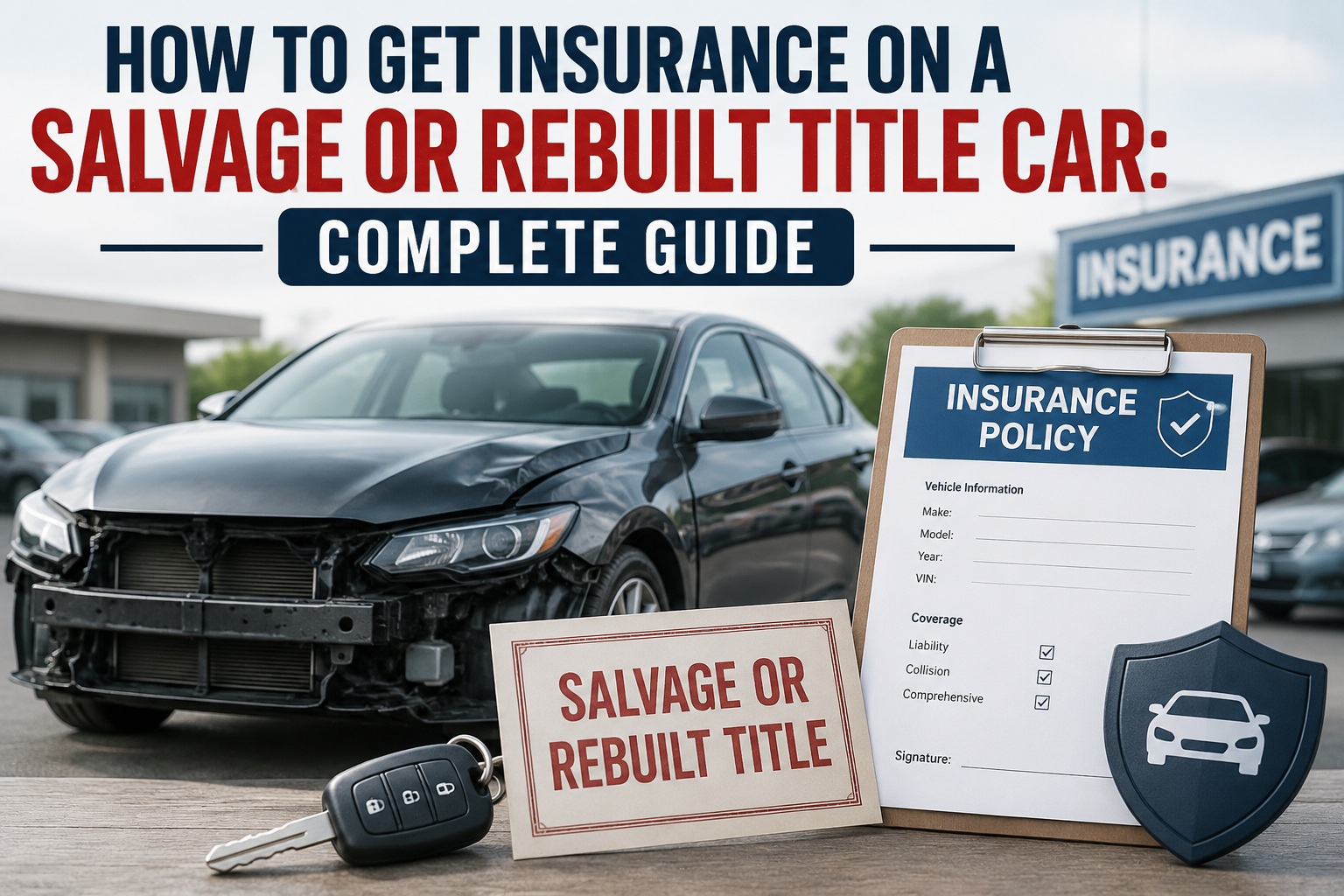
Buying a salvage or rebuilt title car can save you a significant amount of money upfront, but one question stops many buyers cold: can you actually get insurance on a salvage or rebuilt title car? The short answer is yes, but the process works differently than insuring a standard clean-title vehicle.
Understanding what coverage is available, which companies offer it, and how the title type affects your premiums is essential before you commit to any purchase. If you are new to the subject and want to understand the basics, our community has extensive resources to help you get started.
What Is Salvage Car Insurance?
Salvage car insurance refers to the type of auto insurance policy that covers a vehicle with a salvage or rebuilt title. Standard auto insurance policies are designed for clean-title vehicles. When a car receives a salvage title, it falls into a special category that most major insurers either limit or exclude from their standard coverage options.
A salvage title is issued when an insurance company declares a vehicle a total loss, meaning the cost of repairs exceeded a set percentage of the car’s actual cash value. This threshold varies by state but is typically between 60% and 90%. Once branded as salvage, the vehicle cannot legally be driven on public roads in most states until it has been repaired, inspected, and issued a rebuilt title.
Before purchasing any vehicle with this designation, it’s crucial to understand whether they’re worth buying based on your specific situation and budget.
Important: A salvage-branded vehicle typically cannot be covered by comprehensive or collision insurance. Only after it earns a rebuilt title through repairs and state inspections do more complete coverage options become available.
Salvage Title vs. Rebuilt Title: Insurance Differences
This is the most critical distinction you need to understand before purchasing. A salvage title and a rebuilt title are not the same thing, and they are treated very differently by insurance companies.
| Feature | Salvage Title | Rebuilt Title |
|---|---|---|
| Liability Insurance | Very Difficult | Available |
| Comprehensive Coverage | Rarely Available | Often Available |
| Collision Coverage | Almost Never | Sometimes Available |
| Full Coverage | Not Available | Possible (select insurers) |
| Road Legal Status | No (most states) | Yes |
Types of Coverage Available for Salvage and Rebuilt Cars
Understanding which types of coverage you can realistically obtain is essential before purchasing a salvage or rebuilt title vehicle.
Liability Insurance
Liability insurance is the most basic level of coverage and is legally required in almost every state. It covers damage you cause to other people and their property, not your own vehicle. For rebuilt title cars, most insurers will offer liability coverage. For salvage title cars that are not yet road-legal, liability coverage is largely irrelevant since the vehicle cannot legally be driven in most states.
Comprehensive Coverage
Comprehensive coverage protects your vehicle against non-collision events such as theft, fire, flooding, hail, and vandalism. For rebuilt title vehicles, some specialty insurers offer comprehensive coverage, but it may come with exclusions or reduced payouts based on the vehicle’s diminished value due to its title history.
Collision Coverage
Collision coverage pays for damage to your vehicle when it is involved in an accident, regardless of who is at fault. This is the most difficult type of coverage to obtain for rebuilt title vehicles. Some specialty insurers offer it, but standard national insurers often decline rebuilt title vehicles for collision coverage entirely.
Full Coverage for Rebuilt Title Cars
Full coverage, which typically combines liability, collision, and comprehensive, is possible for rebuilt title vehicles but requires working with specialty insurers. The payout in the event of a total loss will reflect the rebuilt title vehicle’s actual market value, which is lower than a comparable clean-title car due to permanent title branding.
Key Point: Even if an insurer offers full coverage for a rebuilt title car, the settlement in a total-loss claim will reflect the vehicle’s rebuilt-title market value, typically 20 to 40% less than an equivalent clean-title vehicle. Plan your coverage amount accordingly.
How to Get Insurance on a Salvage or Rebuilt Title Car: Step by Step
Follow these steps carefully to secure proper insurance coverage for your salvage or rebuilt title vehicle.
Step 1: Confirm the Title Status
Before anything else, confirm whether your vehicle currently holds a salvage title or a rebuilt title. The process and available coverage differ significantly. If you have a salvage title and want expanded coverage options, you will need to complete all required repairs and convert it to a rebuilt title through your state’s DMV process first.
Step 2: Gather All Documentation
Collect all repair receipts, parts invoices, inspection reports, VIN verification documents, and the current title. Insurers offering coverage for rebuilt title vehicles will want verifiable proof that the car was properly repaired and passed required state safety inspections. The more organized your documentation, the smoother the process.
Step 3: Get an Independent Mechanical Appraisal
Many insurers require or strongly recommend an independent appraisal of a rebuilt title vehicle before issuing a policy. This establishes the vehicle’s current fair market value and ensures the coverage amount is appropriate. It also demonstrates to the insurer that the vehicle is in roadworthy condition.
Step 4: Contact Specialty Insurers First
Do not waste time calling major national insurers that do not cover rebuilt title cars. Start with companies known to insure these vehicles, such as Progressive, State Farm, American Family, Infinity Auto, and Grundy Insurance. Coverage options vary significantly by state, so always confirm availability in your specific location.
Step 5: Compare Quotes from Multiple Providers
Rates for rebuilt title vehicles vary substantially between insurers. Getting at least three to five quotes gives you a realistic picture of what coverage is available and at what cost. Do not accept the first quote you receive, as the difference between providers can be significant.
Step 6: Review All Policy Exclusions Carefully
Always read the fine print before signing. Some policies for rebuilt title vehicles include exclusions for pre-existing damage conditions, specific damage types, or components that were involved in the original salvage event. Understand exactly what is and is not covered before committing to a policy.
If you are still deciding whether to purchase a salvage vehicle, join the discussion on insurance experiences where buyers share their real-world experiences navigating this process.
Insurance Companies That Cover Salvage and Rebuilt Title Cars
Not every major insurer will cover rebuilt title vehicles, and availability varies by state. Below is a general overview of insurers that have been known to offer coverage for rebuilt title vehicles.
| Insurer | Coverage Rating | Notes |
|---|---|---|
| Progressive | Good | Known for flexibility with non-standard vehicles. May offer full coverage for rebuilt titles depending on vehicle and state. |
| State Farm | Good | Offers liability coverage for rebuilt title vehicles in many states. Collision and comprehensive vary by location. |
| American Family | Moderate | Provides coverage options for rebuilt title vehicles in select states. Worth contacting for a direct quote. |
| Infinity Auto | Good | Specialty insurer that frequently covers non-standard and rebuilt title vehicles. Strong option to explore. |
| Grundy Insurance | Specialty | Specializes in collector and specialty vehicles, including rebuilt-title classics. Best for older or collectible vehicles. |
Tip: Always contact your state’s Department of Insurance to confirm which insurers are licensed to cover rebuilt title vehicles in your specific state. Coverage availability changes regularly and varies significantly by location.
How Much Does Insurance Cost for a Rebuilt Title Car?
Insurance costs for rebuilt title vehicles are generally higher than clean-title vehicles in the same class. The premium increase exists because insurers view rebuilt title vehicles as higher risk due to inherent uncertainty about the quality of repairs performed and the vehicle’s long-term structural integrity.
On average, rebuilt title car insurance runs 10% to 20% higher than an equivalent clean-title vehicle’s insurance rate. For liability-only coverage, the difference may be minimal. For full coverage including collision and comprehensive, the gap is typically wider.
Factors That Affect Your Rebuilt Title Insurance Premium
- Title history and damage type: The nature and severity of the original damage (collision, flood, fire, hail) affects how insurers assess risk.
- Quality and documentation of repairs: Well-documented repairs with receipts, inspection certificates, and part invoices can reduce your risk rating.
- State of registration: Insurance regulations and available providers vary significantly by state.
- Vehicle make and model: Replacement part availability and repair costs for your specific vehicle influence the premium.
- Driver profile: Your age, driving history, and in some states your credit score all factor into the final premium.
- Coverage level selected: Liability-only coverage costs significantly less than full coverage with collision and comprehensive.
Even with higher insurance costs, the total cost of ownership for a rebuilt title vehicle is often significantly lower than a clean-title equivalent, primarily because of the much lower purchase price. Many buyers find this makes salvage cars worthwhile despite the insurance considerations.
Tips to Lower Your Insurance Premium on a Rebuilt Title Car
While you cannot eliminate the premium surcharge that comes with a rebuilt title, there are several proven strategies to reduce your insurance costs without sacrificing essential protection.
1. Provide Complete and Organized Repair Documentation
The more documentation you have (repair receipts, parts invoices, labor records, inspection certificates), the more confidence an insurer has in the quality of the rebuild. This transparency can translate directly into lower risk ratings and reduced premiums.
2. Get a Pre-Insurance Mechanical Inspection
Having a certified mechanic or licensed body shop inspect the vehicle and provide a written condition report demonstrates that the car is roadworthy. Some insurers will offer measurably better rates when you present a professional inspection report.
3. Opt for a Higher Deductible
Choosing a higher deductible (the amount you pay out of pocket before insurance kicks in) reduces your monthly premium. This strategy works best if you have an emergency fund set aside and are confident in the vehicle’s mechanical reliability.
4. Bundle Your Insurance Policies
If an insurer provides both your homeowner’s or renter’s insurance and your auto insurance, you may qualify for a multi-policy discount. This bundle discount can offset part of the rebuilt title surcharge.
5. Maintain a Clean Driving Record
Your driving history is one of the largest controllable factors in determining your premium. A clean record with no at-fault accidents, moving violations, or claims helps you qualify for better rates regardless of the vehicle’s title status.
Common Mistakes to Avoid When Insuring a Salvage or Rebuilt Title Car
These are the most frequent and costly errors buyers make when trying to insure a salvage or rebuilt title vehicle.
Mistake #1: Assuming Any Insurer Will Cover You
Many national insurers decline rebuilt title vehicles outright for collision and comprehensive coverage. Do not purchase a rebuilt title vehicle and then discover it is uninsurable for the coverage you need. Always confirm insurance availability for that specific vehicle in your state before completing the purchase.
Mistake #2: Skipping the Pre-Purchase Inspection
Insurance companies may deny a claim if they determine the vehicle had pre-existing damage that was not disclosed at the time of policy application. Before buying, make sure you know how to inspect a salvage car properly to avoid future insurance complications.
Mistake #3: Not Disclosing the Title History
Failing to disclose a rebuilt or salvage title when applying for insurance is considered material misrepresentation and can legally void your policy. Always be fully transparent with your insurer about the vehicle’s complete title history.
Mistake #4: Overestimating the Settlement Value
Even with full coverage, a total-loss settlement will reflect the rebuilt title vehicle’s actual market value, not what you originally paid or what you spent on repairs. Rebuilt title vehicles are valued lower than clean-title equivalents.
Frequently Asked Questions
Can you get full coverage insurance on a rebuilt title car?
Yes, but it requires working with specialty insurers. Full coverage (combining liability, collision, and comprehensive) is available for rebuilt title cars from certain providers such as Progressive and Infinity Auto, though not all major national insurers offer it. Coverage availability also varies significantly by state.
Can a salvage title car be insured at all?
A salvage title vehicle that is not road-legal cannot receive standard auto insurance in most states. Once it has been repaired, passed required inspections, and converted to a rebuilt title, insurance options open up considerably.
Does a rebuilt title affect insurance rates?
Yes. Rebuilt title vehicles typically carry a premium surcharge of 10 to 20% compared to equivalent clean-title vehicles. The exact impact depends on the insurer, state, vehicle type, and the quality and completeness of documented repairs.
Will insurance pay out if a rebuilt title car is totaled?
Yes, if you have collision or comprehensive coverage with an insurer that covers rebuilt title vehicles. However, the settlement will reflect the rebuilt title car’s actual market value, which is lower than a clean-title equivalent.
What is the best insurance company for a rebuilt title car?
Progressive and State Farm are most frequently cited as the most flexible among major insurers for rebuilt title vehicles. Specialty insurers such as Infinity Auto and Grundy Insurance are also strong options. Always get a minimum of three quotes and compare coverage terms and exclusions carefully.
Final Thoughts
Getting insurance on a salvage or rebuilt title car is absolutely achievable, but it requires more research, more documentation, and a more targeted approach than insuring a standard vehicle. The process is not difficult once you know the steps: confirm your title status, gather all repair documentation, obtain an independent appraisal, contact specialty insurers, compare multiple quotes, and review every policy exclusion before signing.
The financial case for rebuilt title vehicles remains strong. The purchase price savings are real, and with the right insurance policy in place you can drive with full confidence. The most important rule is simple: always verify insurability before you buy, not after.
If you are still researching whether a salvage or rebuilt title vehicle is the right choice for your situation, explore discussions about when to buy and learn from real buyer experiences.
Have questions about your specific situation? Join Salvage Car Forum and post your question to get advice from experienced salvage car buyers and rebuilders.
Related Post

August 29, 2026
Salvage Car
Rebuilt Title Pros and Cons Every Buyer ...

January 9, 2026
Salvage Car


