
September 3, 2026
Salvage Car





Rebuilt Title Pros and Cons Every Buyer Should Know
10 minutes read
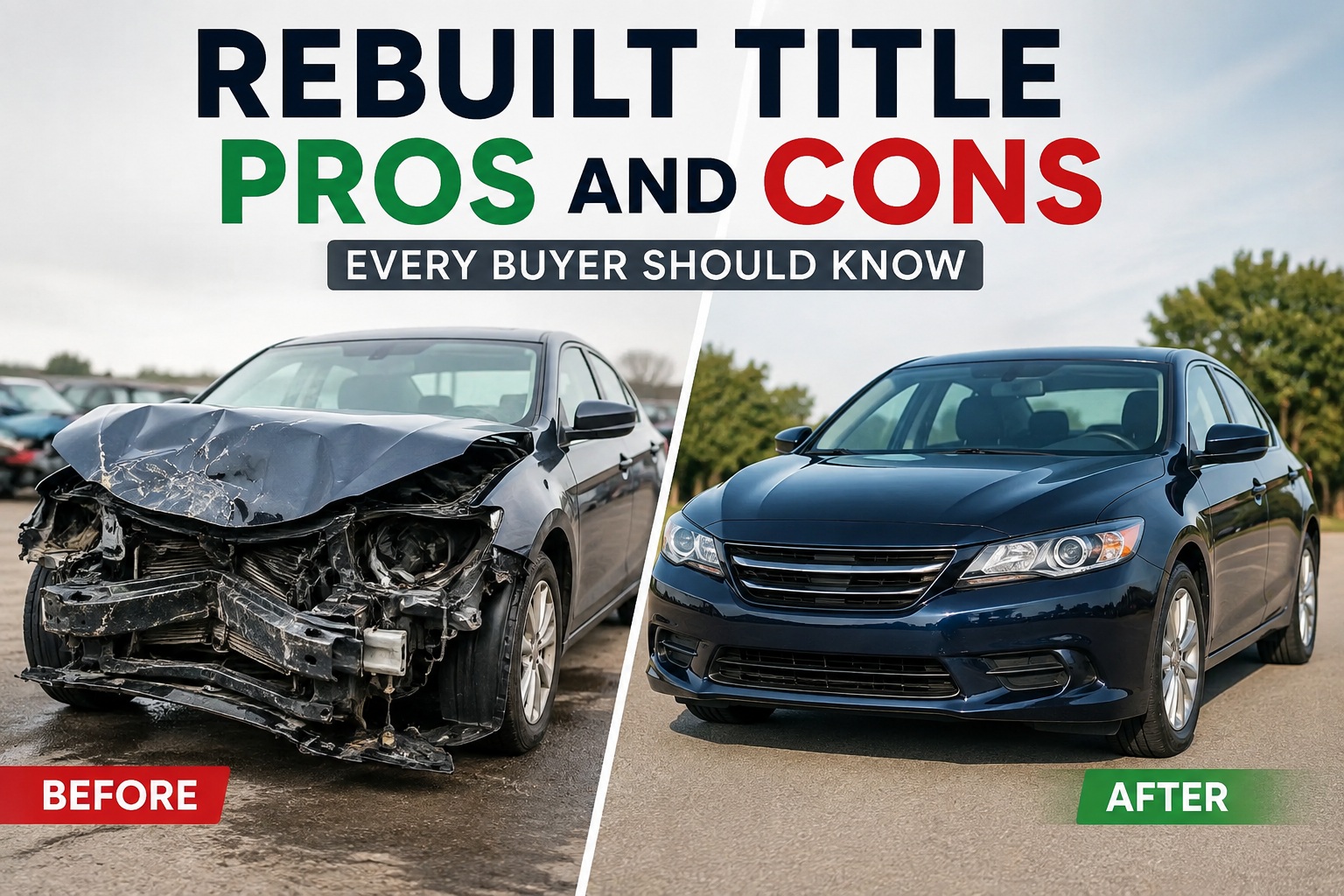
A car with a rebuilt title usually sells for 20% to 40% less than the same car with a clean title, and sometimes the gap is even wider. That discount is the entire appeal of these vehicles, and it is also where every risk begins.
This guide breaks down every rebuilt title pro and con in plain language: what you gain, what you give up, and how to tell a smart buy from an expensive mistake before you hand over any money.
Quick Answer
A rebuilt title car is a smart buy when the discount is deep, the repair history is documented, and an independent mechanic approves the car. It becomes a money pit when any of those pieces is missing. The main pros are major savings, slower depreciation, and a passed state inspection. The main cons are lower insurance payouts, a voided warranty, weaker resale value, and repair quality you have to verify yourself.
What Is a Rebuilt Title, Exactly?
A rebuilt title belongs to a car that was once declared a total loss and later repaired, inspected, and returned to the road. The story always starts with salvage, because every rebuilt car was a salvage car at some point. If that world is new to you, it helps to first understand what salvage means for a vehicle’s title, its value, and its future.
The short version: a car with a salvage title cannot be registered or legally driven. Once it is repaired and passes a state inspection, the title is reissued as rebuilt, and the car becomes street legal again. That journey from total loss to roadworthy is what separates rebuilt from salvage, and it is the reason a rebuilt car can be insured, registered, and sold like a normal used car.
The Pros of a Rebuilt Title Car
1. You pay far less upfront
This is the headline benefit. Rebuilt cars typically sell for 20% to 40% below the clean-title price, and deeper discounts are common on older or higher-mileage vehicles. On a car that books for $25,000 clean, that can mean $5,000 to $10,000 stays in your pocket.
2. Depreciation has already done its worst
New cars lose value fastest in their first years, but a branded car took that hit the day it was declared a total loss. The chart flattened early, so as an owner you lose less value per year than the clean-title owner does.
3. The car passed an official state inspection
Before a salvage car can earn a rebuilt title, it must pass a state inspection covering basic safety and roadworthiness. That process is not perfect, but it is a real checkpoint that many cheap used cars never face.
4. You can register and insure it like any other car
Once the rebuilt title is in hand, the car is treated as street legal. From that point on you can insure and register the vehicle like any other, liability coverage is easy to find, and full coverage is available from several major insurers with the right documentation.
5. Your budget reaches a better car
The discount often buys you a newer model year, lower mileage, or a higher trim than your budget would otherwise allow. For buyers who keep a car for many years, that upgrade can make daily driving noticeably more comfortable for the same money.
The Cons of a Rebuilt Title Car
1. Repair quality is the great unknown
You are buying someone else’s repairs, and not every shop cuts corners equally. Structural work, wiring, airbag systems, and sensor calibration can all hide problems that a test drive will never reveal, which is why a proper salvage car inspection matters so much when the title is branded.
2. Insurance pays out less, and full coverage is harder to get
Insurers value rebuilt cars below clean-title equivalents, so a total-loss payout may fall 20% to 40% short of what you paid. Several carriers also limit or decline comprehensive and collision coverage on branded cars, so insuring rebuilt cars takes extra planning before you commit to a purchase.
3. The warranty is almost always gone
A total-loss declaration usually voids the manufacturer’s original warranty, and third-party warranty companies often reject branded titles too. Repairs after your purchase come out of your own pocket.
4. Resale takes a permanent hit
Many shoppers filter out branded cars automatically. When you sell, expect a smaller pool of buyers, a longer wait, and offers below the clean-title price. The discount you enjoyed on day one follows the car for life.
5. Financing options are thin
Most banks and credit unions avoid branded-title loans, so these purchases are usually cash deals. If you were counting on financing, the plan can fall apart after you have already agreed on a price.
6. Histories can hide things
Poor records, undisclosed flood exposure, and title washing all exist in this market, so before anything else, answer one question honestly: should you buy a salvage car at all? That decision shapes everything else in this process.
Rebuilt Title Pros and Cons at a Glance
| Pros of a Rebuilt Title | Cons of a Rebuilt Title |
|---|---|
| 20% to 40% or more below the clean-title price | Claim payouts fall short if the car is totaled again |
| The biggest depreciation hit already happened | Comprehensive and collision coverage are harder to find |
| The car passed a state safety inspection | Manufacturer warranty is usually void |
| Registration and liability insurance are available | Resale value is permanently reduced |
| A bigger, better car fits the same budget | Repair quality must be verified with your own inspection |
Whether the pros outweigh the cons depends heavily on the specific car, its history, and the quality of its repairs, which is also why opinions differ so much on whether these vehicles are worth buying in the first place.
Who Should Buy a Rebuilt Title Car
- You are paying cash and plan to keep the car for several years.
- The original damage was minor or cosmetic, and the repair records are complete.
- An independent mechanic you trust has examined the car and approved it.
- The price sits at least 30% to 40% below the clean-title value.
- You are comfortable carrying liability coverage and accepting a lower payout if the car is ever totaled again.
Who Should Walk Away
- You need financing, or full coverage is a condition of the purchase.
- The seller cannot produce repair records, inspection papers, or a straight answer about the original damage.
- The car has a flood or rollover history, no matter how good it looks now.
- The discount is under about 20%, which does not pay you for the risk.
- You plan to trade in or resell within a couple of years.
How to Buy a Rebuilt Title Car the Smart Way
If the pros have your attention, run this playbook before you commit:
- Pull the vehicle history report. Confirm when the car was branded, in which state, and what the reported damage was.
- Identify the original damage. Ask for repair invoices, insurance settlement photos, or the salvage yard listing so you know what was actually fixed.
- Get an independent inspection. A pre-purchase inspection by a mechanic you trust is the single most important step, because it turns the biggest unknown into a documented answer.
- Verify the paperwork. Match the title, the state inspection certificate, and the VIN on the dash and door jamb. Any mismatch ends the conversation.
- Price the car honestly. Find the clean-title value, subtract at least 25% to 40%, and compare that number with the asking price.
- Arrange insurance before you buy. Get a real quote for the exact VIN so you know the coverage and the payout assumptions in advance.
- Put everything in writing. Title status, damage disclosure, and any seller promises belong in the bill of sale.
Frequently Asked Questions
Is buying a car with a rebuilt title a good idea?
It can be, when the discount is deep, the repair records are complete, and an independent mechanic approves the car. It becomes a poor idea when any of those pieces is missing, because the buyer absorbs the risk without being paid for it. Every rebuilt car should be judged on its own history.
How much value does a rebuilt title lose?
Rebuilt cars commonly sell for 20% to 40% below comparable clean-title vehicles, and sometimes more depending on the car, the market, and the quality of the documentation. The discount is permanent, which affects both the purchase price and any future resale.
Can you insure a car with a rebuilt title?
Yes, rebuilt cars can generally be registered and insured. Liability coverage is widely available, while comprehensive and collision coverage depend on the insurer, the vehicle, and the state. Many insurers ask for photos or an inspection before offering full coverage, and claim payouts may be calculated on the car’s reduced value.
Does a rebuilt title affect resale value?
It usually does. Branded cars attract a smaller pool of buyers, often take longer to sell, and typically fetch less than clean-title equivalents. The discount you received when buying is generally passed on when selling.
Can a rebuilt title go back to clean?
No. Once a title has been branded rebuilt, the history stays with the vehicle. Some sellers attempt title washing by moving cars through states with different branding rules, which is a fraudulent practice and one more reason to verify history through an independent report.
What should I check before buying a rebuilt title car?
Start with the vehicle history report, the original damage, and the repair documentation. Then have the car examined by an independent mechanic, verify that the title and inspection paperwork match the VIN, and confirm insurance options for the exact vehicle before agreeing to a price.
Related Post

September 5, 2026
Salvage Car
Salvage Title Laws by State: A Buyer Ref...

September 1, 2026
Salvage Car


