
August 31, 2026
Salvage Car





How to Buy From Copart: A Step by Step Walkthrough for New Buyers
12 minutes read
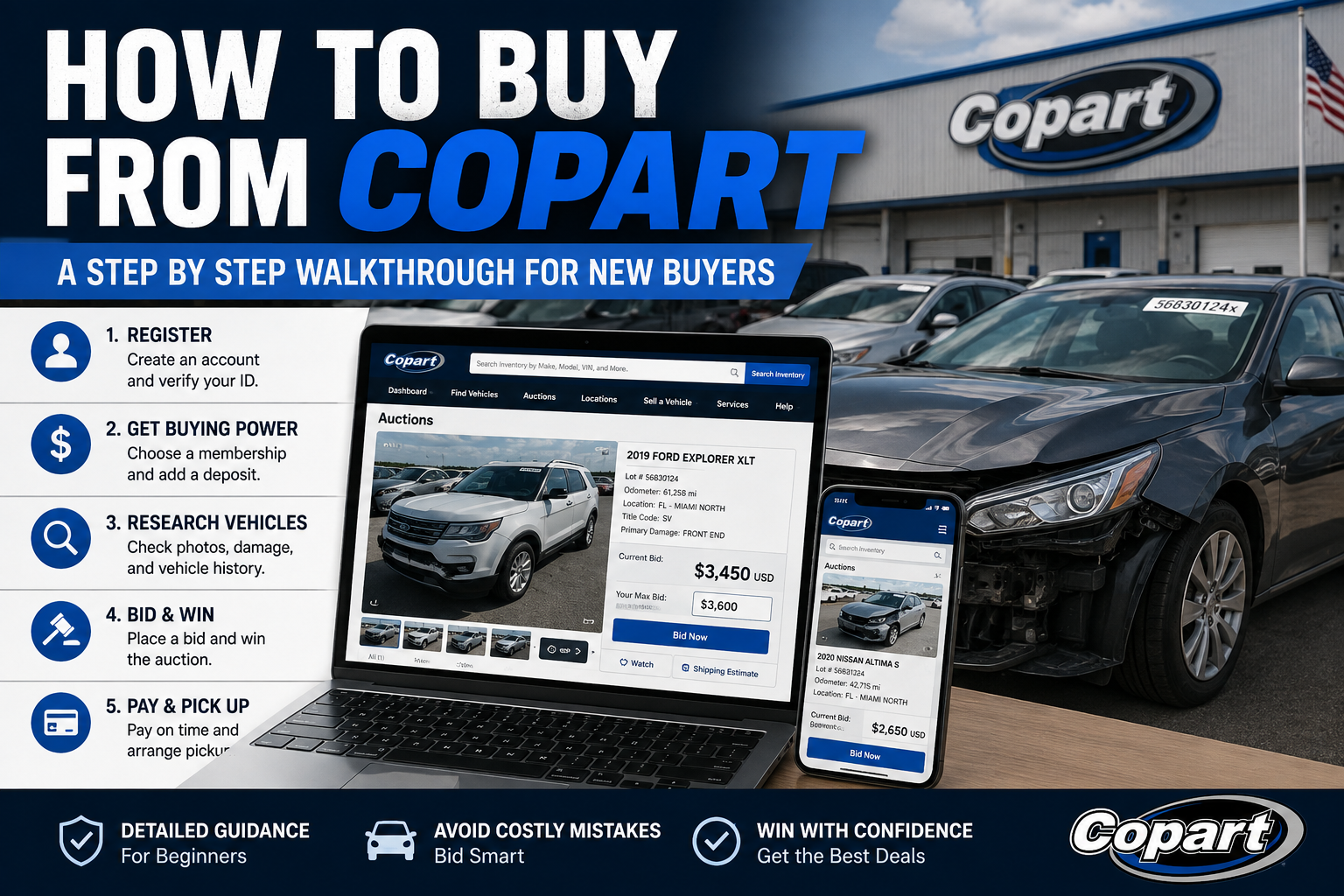
Copart moves more cars in a single week than most dealerships sell in a year, and many of those vehicles sell for a fraction of their retail value. A clean-looking sedan with light front damage might carry a $15,000 retail value and sell at auction for under $9,000. The catch is simple: Copart is built for dealers, and buying from Copart as a first-timer only works when you understand the system before your first bid instead of after your first mistake.
This walkthrough shows exactly how to buy from Copart as a beginner: which membership fits you, how buying power actually works, what the fees really add up to, how to bid without overpaying, and what to do in the first hour after you win. Follow the steps in order and your first Copart purchase can be a deal instead of a lesson.
Quick Answer
To buy from Copart, create an account and upload your ID for verification, choose a Basic membership (about $99 to $109 per year) or Premier (about $249 to $265 per year), add a deposit so your buying power covers your target bid, research the listing and its fees, place a pre-bid or join the live auction, pay within the deadline, and arrange pickup before storage fees start. First-time buyers should stick to run-and-drive vehicles with documented damage and bid no more than the numbers justify.
What Is Copart and How Does It Work?
Copart is the largest online salvage auction platform in the United States, processing around 4 million vehicles a year from insurance total-loss claims, bank repossessions, rental fleets, and charity donations. Nearly everything happens online: sellers list vehicles with photos and damage details, members bid through the website or the Copart mobile app, and winners collect the cars from one of Copart’s 200-plus yards. There are no test drives and no showroom floor, so your entire judgment rests on the listing, which is why understanding the platform comes before understanding the cars.
Most Copart vehicles carry a salvage brand, which means an insurer already declared them a total loss. If that concept is new, start with what salvage means on a vehicle, because every bidding decision downstream depends on it. A salvaged car cannot be driven home, and after repairs and a state inspection it becomes rebuilt, a difference that shapes both the title types and the future value of whatever you buy.
Step 1: Create Your Copart Account
Registration starts at copart.com, where you create an account with your email and then upload a government-issued ID for verification. Copart reviews your documents before you can bid, and this check usually completes within a day, so finish it well before the auction you care about. While registering, you will also choose a bidding method: pre-bidding lets you set your maximum before the sale, while live bidding puts you in the real-time auction through Copart’s VB3 platform or the mobile app. Public buyers can bid in most states, though a small share of listings stays restricted to licensed dealers, and those listings show their eligibility rules on the vehicle page.
Step 2: Choose Your Membership
Copart offers two membership tiers, and the right choice depends on how often you plan to buy:
| Feature | Basic Membership | Premier Membership |
|---|---|---|
| Annual fee | About $99 to $109 | About $249 to $265 |
| Starting buying power | Around $1,200 to $2,000 | Up to $100,000 daily |
| Deposit requirement | 10% of your maximum bid | One refundable $400 deposit |
| Best for | One or two purchases a year | Frequent or high-value bidding |
Most first-time buyers start with Basic, and that is fine for a single low-value purchase. If the car you want will realistically bid past $2,000, plan for the deposit math in the next step, because that is where beginners get stuck.
Step 3: Understand Buying Power and Deposits
Buying power is the maximum amount you can bid, and it is the number one thing new Copart users misunderstand. As a Basic member you start with around $1,200 to $2,000 in buying power, and you raise it by depositing at least 10% of your maximum bid. Want to bid up to $4,000 on a sedan? Deposit $400 first. Want to bid $8,000? Deposit $800. Copart holds the deposit as security, refunds it when it is not tied to an active purchase, and will not let you increase it in the middle of a live auction, so it must be in place before the sale starts. Two more details matter: deposits need time to clear before the sale, and on Basic each deposit covers one vehicle at a time. Premier members skip this entire dance with one refundable $400 deposit and bidding power up to $100,000 daily, which is why frequent buyers upgrade quickly.
Step 4: Research the Vehicle Before You Bid
Every Copart listing gives you a lot code, photos, a damage report, a title type, an odometer reading, and a sale status. Read all of it. Use the filters to narrow by title type, condition code, and damage category before you fall in love with a listing, then zoom into the photos in full screen, check the airbags, the wheels, and the interior, and favor listings with complete damage stories over vague ones. Pay special attention to the condition codes: “run and drive” means the vehicle started and moved under its own power at the yard, “enhanced images” means Copart photographed the undercarriage, and “stationary” tells you the car does not roll, which changes the transport and repair math completely. Run the vehicle history report, look up the clean-title retail value, and price the repair work before the auction, not during it. Since you cannot walk the yard in person as a public buyer, your inspection happens through the listing, and the same judgment that goes into a salvage car inspection is what you apply photo by photo here.
Step 5: Calculate the True Cost of Winning
The winning bid is only the beginning. Copart adds a buyer fee that scales with the price, an internet bid fee for online bidding, a gate fee near $95 for salvage vehicles, an environmental fee, and title processing charges, which together usually add 20% to 30% on top of the hammer price. Add transport, sales tax, and storage risk on top of that, and a realistic budget looks like this:
| Cost Item | Example on a $5,000 Win |
|---|---|
| Winning bid | $5,000 |
| Buyer fee and auction charges | Around $1,100 to $1,400 |
| Transport to your shop | $200 to $500 |
| Sales tax (varies by state) | 3% to 10% |
| Repairs and retitle costs | Depends on damage |
Copart’s fee calculator shows the exact number for any bid before you place it, and professionals check it every single time, because the difference between a deal and a mistake is usually hiding in these charges.
Step 6: Bid Smart on Auction Day
Copart auctions run in two stages. First comes pre-bidding, where you enter your maximum and the system bids for you automatically up to that number. Then the live auction opens, and pre-bids compete against live bidders in real time. Watch the increments: bids climb in set steps, and last-second bids from international buyers are common on clean-looking lots. The discipline that separates winners from overpayers is deciding your maximum before the sale and refusing to move it, because the final 30 seconds is exactly where budgets die. If the bidding passes your number, close the tab; Copart lists roughly 200,000 vehicles at any moment, and another deal is always a search away.
Step 7: Pay, Pick Up, and Handle the Paperwork
After you win, Copart expects payment within the stated deadline, typically one to three business days depending on the payment method, and the vehicle must leave the yard within a few days or daily storage fees begin at $40 or more. Funding options include the Copart Wallet, bank transfers, and cards for smaller amounts, and a failed or late payment can cost you the sale plus a restock fee, so have the money liquid before you bid. Most buyers arrange a tow or a carrier through Copart’s transport marketplace, and public buyers generally cannot drive a salvage-branded vehicle off the lot anyway. Once the title arrives, the car follows your state’s repair, inspection, and retitle process, and it is worth reading the pros and cons of rebuilt titles before you spend a dollar on repairs, because that branded history shapes the resale value forever.
Common Copart Mistakes New Buyers Make
✕ Avoid These
- Bidding before your ID verification and deposit are in place.
- Trusting the four best photos instead of opening every image.
- Ignoring the fee calculator and budgeting only the winning bid.
- Raising your maximum live in the auction after planning a lower number.
- Forgetting that stationary vehicles may need an engine, not a battery.
Is Buying From Copart Worth It?
For disciplined buyers, absolutely. Between the auction price and clean-title retail, the platform routinely leaves 30% to 60% on the table even after fees, and knowing how to insure and register the rebuilt car afterward keeps those savings real. The honest test is the one we covered in whether you should buy a salvage car at all: if you can verify the damage, afford the true cost, and accept the branded title, Copart is the cheapest car buying channel in the country. If any of those pieces is missing, no discount is big enough. That is also why opinions stay split on whether salvage vehicles are worth buying, and why the answer lives in your homework, not in the auction.
FAQs
Can anyone buy from Copart without a dealer license?
Yes, in most states public buyers can bid directly with a Copart membership, and where state rules restrict public buying, a licensed broker can bid on your behalf. A small share of listings is limited to licensed dealers, and those vehicles show their eligibility requirements on the auction page.
How much does it cost to join Copart?
Basic membership runs roughly $99 to $109 per year and starts with about $1,200 to $2,000 in buying power, while Premier membership runs roughly $249 to $265 per year plus one refundable $400 deposit with up to $100,000 in daily buying power. Deposits for Basic members cost at least 10% of your maximum bid and are refundable when not tied to a purchase.
What fees does Copart charge on top of the winning bid?
Expect a buyer fee that scales with the sale price, an internet bid fee, a gate fee near $95 for salvage vehicles, an environmental fee, and title processing charges. Together these usually add 20% to 30% over the hammer price, and Copart’s fee calculator shows the exact amount before you bid, so use it every time.
Can you inspect Copart vehicles before bidding?
Public buyers generally cannot inspect vehicles in person, although some yards allow visits and third-party inspection services exist for a fee. Most members judge listings through the photo gallery, the damage report, the condition code, and a vehicle history report, which makes documented damage and run-and-drive vehicles the safer targets for beginners.
What happens after you win a Copart auction?
You pay within one to three business days depending on the payment method, arrange transport out of the yard before storage fees start, and receive the title paperwork. From there the vehicle goes through your state’s repair, inspection, and retitle process before it can be registered for road use.
Can I buy from Copart without a dealer license?
Yes. Public buyers in most states can register, verify their ID, pay the membership fee, and bid directly, and buyers in restricted states use a licensed broker instead. A dealer license is never required to start, though some individual lots are marked dealer-only on their auction pages.
How much should a first-time buyer spend on Copart?
Beginners do best with one modest purchase: a run-and-drive vehicle with documented cosmetic or collision damage, a complete photo set, and a maximum bid that stays affordable even after the roughly 20% to 30% in fees. Treat the first purchase as tuition in reading listings, and scale up only after you have handled the paperwork and transport once.
Related Post


August 28, 2026
Salvage Car
Should I Buy a Salvage Car? What Nobody ...

August 25, 2026
Salvage Car


