
August 25, 2026
Salvage Car





Flood Damaged Car Problems That Show Up After You Buy
12 minutes read
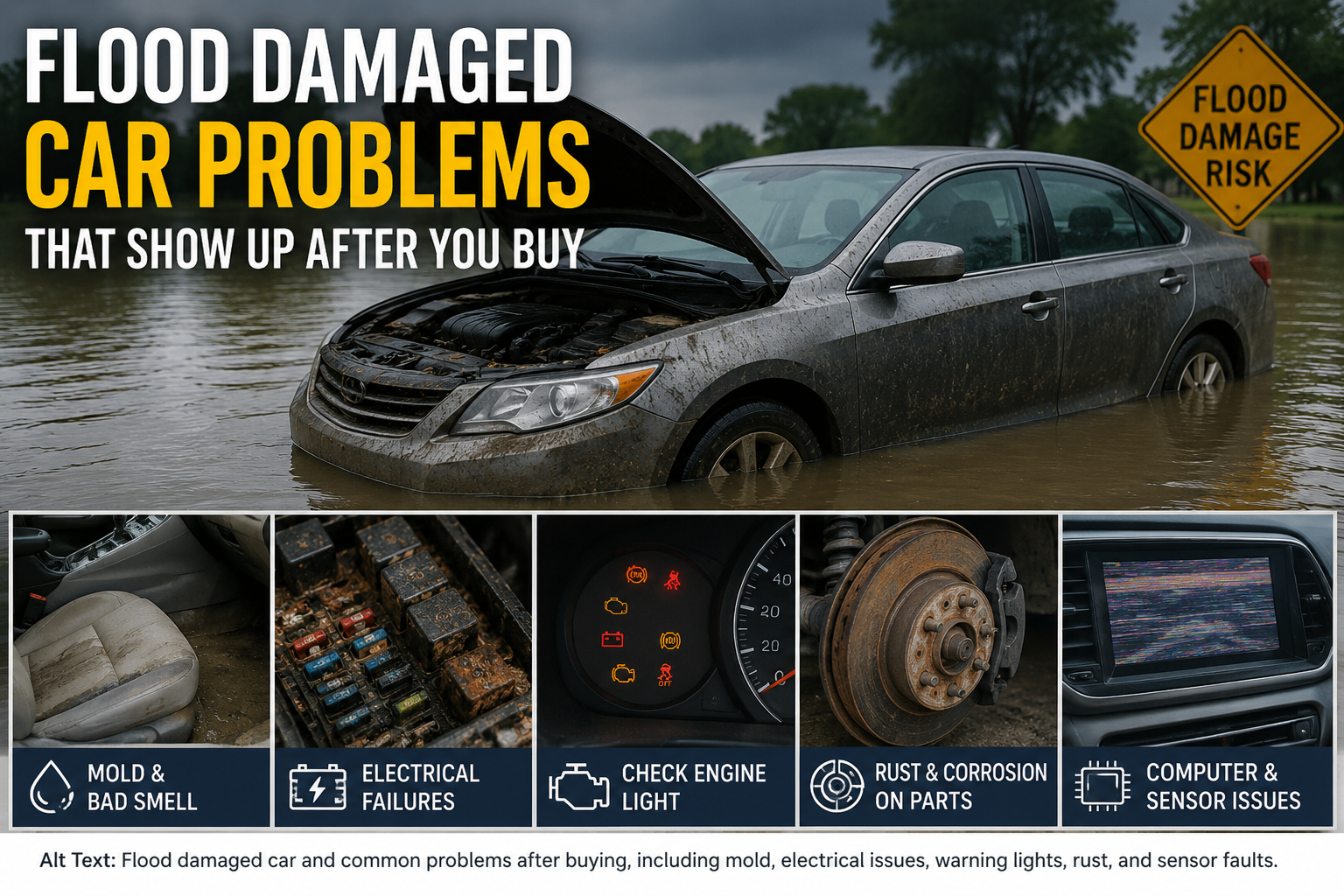
Imagine buying a used car that looks showroom clean, drives perfectly for two months, and then dies on the highway without warning. That is exactly how flood damaged car problems usually play out. Water never stays where you can see it. It hides deep in wiring harnesses, carpets, sensors, and steel, and it keeps causing damage long after the car looks and feels dry.
Every hurricane and flash flood pushes thousands of water damaged cars back onto the used market. Some are rebuilt honestly and sold with a flood brand on the title. Others are cosmetically cleaned and flipped with no paperwork at all. This guide explains the problems flood damaged cars develop after purchase, the signs of flood damage you can check in ten minutes, and the situations where buying one makes sense, if ever.
Quick Answer
A flood damaged car can look flawless while corrosion spreads silently through its electronics, fluids, and frame. The most common flood damaged car problems are wave-after-wave electrical failures, returning mold, hidden rust, contaminated fluids, and safety systems that fail months later. Freshwater cars with minor exposure can sometimes be restored properly, but saltwater cars should almost always be avoided. If you ever consider one, demand a deep discount, full repair records, and an independent inspection first.
Why Flood Damaged Cars End Up for Sale
After a major flood, insurers inspect the swamped vehicles and declare the worst ones total losses. A car becomes salvage when repair costs pass the point where the insurer stops paying, and if that process is new to you, start by understanding what salvage means on a vehicle. Those written-off cars are auctioned cheap, often to rebuilders.
From there, two paths exist. An honest rebuilder dries, documents, repairs, and inspects the car until it earns a new title, which is what separates rebuilt from salvage vehicles. A dishonest flipper shampoos the carpet, masks the smell, photographs the shiny exterior, and resells the car with hidden water damage and no paper trail. The first path can produce a usable car. The second produces almost every flood car horror story you have heard.
Six Flood Damaged Car Problems That Show Up Months Later
1. Electrical failures that arrive in waves
Water rarely kills electronics on the spot. It leaves moisture and minerals behind, and corrosion creeps across connectors, pins, and circuit boards over the following weeks. The car runs fine at first, then a power window sticks, dashboard lights flicker, sensors throw random warnings, and modules fail one by one. Because these faults come and go early on, even mechanics chase them for months before someone traces them back to water.
2. Mold and mildew that keep coming back
Carpet and seat foam hold water like a sponge. If the padding was never removed and replaced, mold grows underneath where surface cleaning cannot reach. The result is a musty smell that returns every humid morning, windows that fog on cool nights, and in some cases genuine health trouble for anyone with allergies or asthma. Doing it right means pulling the seats, discarding wet padding, and treating the vents, which quick flippers almost never do.
3. Hidden rust in the frame and floor
Rust on a brake rotor is normal wear. The dangerous corrosion on a flood car grows where you never look: floor pans, frame rails, seat brackets, wiring channels, and inside doors. Brake lines and fuel lines are the scariest of all, because they corrode from the outside in and can fail without warning. By the time this rust becomes visible, it has usually been spreading for months.
4. Contaminated fluids and early mechanical failure
Water that reaches the engine, transmission, or differentials contaminates the fluids those parts depend on. Milky oil, gritty transmission fluid, and rust inside a differential dramatically shorten component life. Submerged wheel bearings, alternators, starters, and suspension bushings tend to fail early too. In the worst cases, an engine that swallowed water during the flood carries hydrolock damage that only appears under load later.
5. Safety systems that fail when needed most
The most dangerous flood damaged car problems involve safety equipment. Corrosion can quietly disable airbag control modules, seatbelt tensioners, and ABS units without any warning light at first. Modern driver assistance features add another layer of risk, because their cameras and radar sensors are costly to recalibrate and may fail intermittently. A flood car can feel perfectly normal while its safety net quietly rots away.
6. Insurance and resale headaches that never end
A branded flood car loses value permanently. Some insurers limit coverage on it, and claim payouts reflect the reduced value. You can often still insure and register a branded car legally, but expect fewer carriers, lower payouts, and a smaller pool of buyers when you eventually sell, which pushes the price down again.
Eight Signs of a Flood Damaged Car to Check Before Buying
Flood cars are usually cleaned well, but rarely cleaned perfectly. Take a flashlight and check these spots before any money changes hands:
| Where to Look | Signs of Flood Damage |
|---|---|
| Carpet and padding | Stiffness, mud stains, dampness, or brand-new carpet in an older car |
| Under seats and rails | Rust, silt, or dried mud on bolts and brackets |
| Spare tire well | Water lines, sediment rings, or rust in the creases |
| Headlights and taillights | Fogging, droplets, or a visible water line inside the lens |
| Screws and fasteners | Scratched heads showing disassembly, or rust on interior bolts |
| Dashboard electronics | Dim gauges, random warning lights, dead buttons |
| Cabin smell | Musty odor, or strong air freshener masking something |
| Engine bay | Silt in crevices, rust on brackets, water lines on components |
No single sign proves anything, but two or three together are a loud warning. Also run the vehicle history report and match it against the seller’s story. If the seller refuses an independent inspection, that refusal answers the question for you, because a proper salvage car inspection costs little compared with owning the wrong car.
Freshwater vs Saltwater: Not All Flood Cars Are Equal
The type of water matters as much as the depth. A car splashed with clean rainwater that never reached the cabin floor may be fine after thorough drying and fluid changes. A car that sat in salty storm surge is a different story: salt keeps conducting corrosion long after the car dries, eating connectors and brake lines for years. This single difference decides most flood car fates, and it is why honest sellers disclose whether the exposure was fresh or salt water.
Can a Flood Damaged Car Be Fixed and Trusted?
Sometimes, but the bar is high. A properly repaired flood car can pass state inspection and earn a rebuilt title, and if you are weighing one, first read the pros and cons of a rebuilt title. The seller should prove three things with paperwork: what the water touched, which modules and fluids were replaced, and who performed the work. No documentation means no deal, no matter how good the price sounds.
Already Bought a Flood Car? Do These Six Things Now
If a musty smell or strange electrical behavior appears weeks after your purchase, the corrosion clock is already running, so move fast:
- Document everything. Save the listing, the seller’s messages, and the vehicle history report, because you may need to prove what you were told.
- Confirm the history. Check whether a flood or salvage brand exists that was never disclosed to you.
- Inspect the electrics now. Have a technician examine connectors and modules for moisture and corrosion before the faults spread.
- Open up the interior. Pull the carpet and padding, dry the floor pans, and replace any insulation that stayed wet, or the mold will keep returning.
- Service every fluid. Engine oil, transmission, brake fluid, coolant, and differentials all need fresh fluid if water reached them.
- Explore your legal options. If the seller hid known flood damage, consumer protection laws may give you a path to compensation, so ask before absorbing the loss alone.
Should You Buy a Flood Damaged Car?
Answering should you buy a water damaged vehicle honestly comes down to proof and price. There are rare exceptions where the math can work:
✓ Only If
- The exposure was clean freshwater and never reached the cabin floor.
- Complete repair documentation exists, including module replacements and fluid services.
- An independent mechanic inspects it and finds no corrosion in connectors or under the carpet.
- The price sits at least 40% below the clean-title value, paying you well for the risk.
✕ Walk Away If
- The car sat in saltwater, even briefly, no matter how good it looks now.
- The seller has no repair records or pressures you to decide fast.
- You smell mustiness or spot new carpet in an older interior.
- The discount is small, because flood risk is never small.
Flood cars sit at the extreme end of the branded-title world, and they are a big reason opinions differ on whether salvage vehicles are worth buying at all. With any flooded car, the safest assumption is that the damage runs deeper than it looks, because it almost always does.
FAQs
What are the most common flood damaged car problems?
The most common flood damaged car problems are intermittent electrical failures, mold that keeps returning, hidden rust on the frame and brake lines, contaminated fluids that shorten engine and transmission life, and safety systems like airbags and ABS failing without warning. Most of these surface weeks or months after the purchase, not on day one.
How do you check a used car for flood damage?
Run a vehicle history report first, then inspect the car in person with a flashlight. Check the carpet and padding, the spare tire well, under the seats, inside the headlight housings, and the engine bay crevices for water lines, silt, and rust. A musty smell, fogged lenses, or brand-new carpet in an older cabin are classic signs of a flood damaged car.
Can a flood damaged car be reliable after repairs?
It can be, in narrow cases: clean freshwater exposure that never reached the cabin floor, complete documentation of every module and fluid service, and a clean independent inspection. Saltwater cars and undocumented cars rarely stay reliable, because corrosion keeps progressing after the repairs are finished.
Will insurance cover a flood damaged car?
Comprehensive coverage usually pays for flood damage if the policy existed before the event, and badly flooded cars are typically declared total losses. After a car is rebuilt and retitled, insurance remains available from many carriers, though payouts reflect the car’s reduced value and some insurers limit full coverage on branded vehicles.
How much value does a flood damaged car lose?
A flood brand on the title commonly cuts 40% to 60% off the comparable clean-title value, and the discount is permanent. It lowers the purchase price, but it also reduces any future resale, which is part of the total cost of owning a flood damaged car.
Is it ever worth buying a car with flood history?
Only when all four conditions line up: clean freshwater exposure, complete repair documentation, a clean independent inspection, and a price far below the clean-title value. Miss any one of them and the savings rarely cover the long-term cost of the risk.
Related Post

August 29, 2026
Salvage Car
Rebuilt Title Pros and Cons Every Buyer ...
September 1, 2026
Salvage Car


