
January 9, 2026
Salvage Car





Should I Buy a Salvage Car? What Nobody Tells First-Time Buyers
12 minutes read
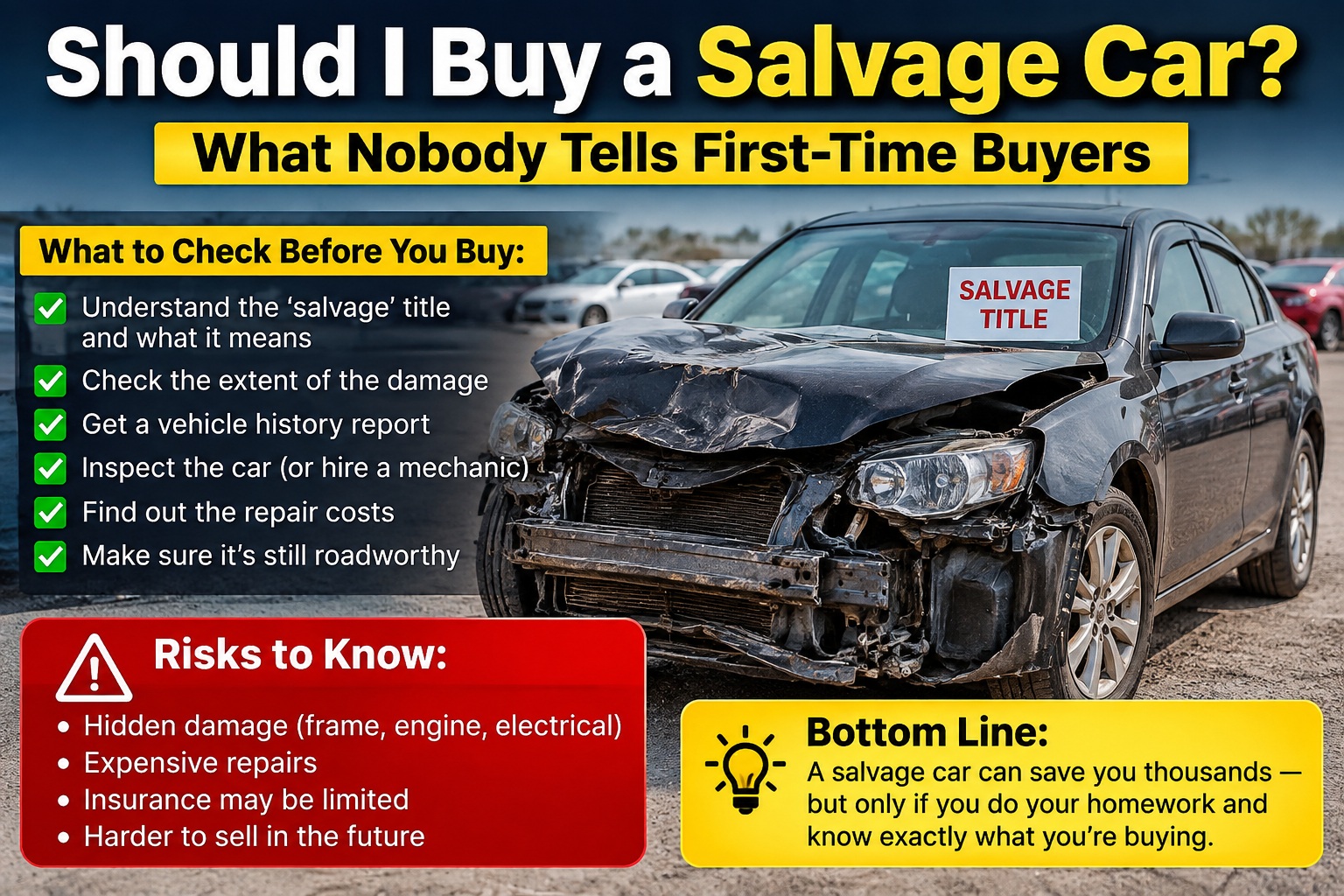
A 2021 Toyota Camry with 40,000 miles books for $24,000. The same car with a branded title is listed for $11,500. That $12,500 gap is exactly why salvage cars sell so fast, and it is also exactly how careless buyers lose everything they saved, and sometimes a lot more.
If you are asking “should I buy a salvage car,” the honest answer is: maybe, and it depends on facts you can verify, not on feelings the price gives you. This guide walks you through both sides: the real savings, the hidden risks nobody mentions until after the purchase, and a checklist to follow before you hand over a single dollar.
Quick Answer
Yes, buying a salvage car can be a smart move. Clean-title buyers often pay 40% to 60% more for the exact same vehicle. But the deal only works if the damage was minor, the repairs are fully documented, an independent mechanic checks the car, and the price reflects the risk. If any of those pieces are missing, walk away, no matter how tempting the price looks.
First, What Exactly Is a Salvage Car?
A car gets a salvage title once an insurance company writes it off, and that is what salvage means on a vehicle. In practice, the repair estimate climbed past a state-set percentage of the car’s value, often 65% to 90%. The trigger can be a crash, a flood, a fire, serious hail, or even a theft recovery where the insurer had already paid the claim before the car came back.
Here is the part surprises people: a salvage car is not automatically a wreck. Some are torn apart behind the looks of a few dented panels, and others are nearly untouched theft recoveries. At the same time, a salvage car cannot be registered or legally driven until it is repaired, inspected, and retitled, which is also where the difference between rebuilt and salvage titles comes from. So the discount you see on the listing is compensation for three things: the past damage, the uncertainty about repair quality, and the hassle you take on as the new owner.
Should You Buy One? The Honest Answer
It depends on three questions you must answer before shopping:
- What actually happened to this specific car? A hail-damaged car and a rolled-over car both wear salvage brands, but they are not remotely the same purchase.
- Who did the repairs, and can they prove it? Documented professional work changes the math completely.
- What will you do with the car? A car you keep for eight years is a far better salvage candidate than one you expect to trade in after two.
Get satisfying answers to all three, and a salvage car can be one of the best deals in the used market. Miss on even one, and the discount is never worth it. Whether salvage cars are worth buying in general is a question we have covered separately, so here we will focus on how to judge a specific deal.
The Case for Buying: Why People Do It
- Massive upfront savings: Salvage and rebuilt cars typically sell for 40% to 60% less than clean-title equivalents. On a $20,000 car, that is $8,000 to $12,000 back in your pocket.
- Slower depreciation: The value already took its hit. A clean-title car loses a big chunk in the first years; the branded car has already been through that drop.
- More car for the money: Buyers regularly get a newer model year, lower mileage, or a higher trim than their budget would otherwise allow.
- Insurance is available: Once the car carries a rebuilt title, you can insure and register it like any other vehicle. Liability coverage is easy to get from nearly every major carrier.
The Risks Nobody Tells First-Time Buyers
This is the section sellers hope you skip. Every one of these points has cost real buyers real money.
1. Hidden damage hides inside “repaired” cars
The headline damage gets fixed; the subtle problems do not. Bent suspension components, shortcut wiring jobs, uncalibrated sensors, and structural repairs done with cheap filler all sit below the surface. A car can look perfect on the lot and drive terribly on the highway, and modern cars fail in expensive electronic ways that a quick test drive will never reveal.
2. Insurance pays out less, sometimes far less
You can insure a rebuilt car, but expect payouts based on its diminished value, commonly 20% to 40% below the same car with a clean title. If that car is ever totaled again, the check will not come close to what you paid. Full coverage is also harder to find, since many carriers refuse it or demand inspections first, so it pays to know how to get insurance on a rebuilt car before you commit.
3. Most lenders will not finance the purchase
Banks and credit unions largely avoid branded-title loans, which means most salvage deals are cash deals. That is fine if you have the money. If you were counting on financing, the plan may fall apart after you have already committed.
4. The warranty is gone
A total-loss declaration voids the manufacturer’s original warranty in almost every case. Any powertrain coverage that remained disappears with the branding, and third-party warranty companies routinely reject branded titles too.
5. Resale is slower and lower
Plenty of shoppers automatically filter out branded cars. When it is your turn to sell, expect a smaller pool of buyers, longer listing times, and offers well below what a clean-title car would fetch.
6. Title washing is a real crime, and it works
Unscrupulous sellers move damaged cars through states with loose branding rules, or scrub a brand off entirely, then sell the car as clean. This is why you verify history independently and never rely on the seller’s story alone.
When Buying a Salvage Car Makes Sense
Green Lights
- The damage was minor or cosmetic, such as hail, glass, or a theft recovery with the car intact.
- Complete repair documentation exists: receipts, parts invoices, and before-and-after photos.
- The car has already earned its rebuilt title by passing a state inspection.
- An independent mechanic you hire examines it and gives a thumbs up.
- The price sits at least 40% below the clean-title value, leaving room for the risk you are absorbing.
- You are paying cash and planning to keep the car for years.
When You Should Walk Away
Red Flags
- The car has frame or structural damage, or a bent roof rail from a rollover.
- It is a flood car. Water-ruined electrics become a time bomb no matter how nice the interior looks.
- The seller has no repair records, or the story keeps changing.
- They refuse an independent inspection or rush you to decide.
- The discount is small. Saving 10% is not compensation for branded-title risk.
- The car relies on ADAS sensors or radar that need expensive recalibration after repairs.
- You need a loan, or you expect full coverage insurance from an insurer that has already said no.
What to Check Before You Hand Over Any Money
Run through this list on every salvage purchase, without exception:
- Pull the vehicle history report. Carfax or AutoCheck will show when the brand was issued, in which state, and sometimes the damage type. Compare the report against what the seller claims.
- Find out the original damage. Ask for the insurance settlement photos or the salvage yard listing. The more you know about what broke, the better you can judge the repair.
- Get it professionally inspected. Pay a trusted independent mechanic to inspect the car before you buy. It costs $100 to $200 and it is the single best money you will spend in this entire process. Knowing how to inspect a salvage car before buying also helps you judge whether the mechanic’s findings are deal breakers or minor fixes.
- Judge the repair quality yourself. Walk around slowly. Look for uneven panel gaps, mismatched paint, overspray on trim or tires, crumpled core support areas, and airbag warning lights that fail to illuminate at startup.
- Verify the paperwork. For a rebuilt car, match the title, the state inspection certificate, and the VIN on the dash and door jamb. Any mismatch ends the conversation.
- Price it against the market. Look up the clean-title value, then subtract 40% minimum. If the asking price beats that number, you are not being paid for the risk.
- Line up insurance first. Get a real quote for the exact VIN before you sign anything, so there are no surprises after the purchase.
- Put everything in the bill of sale. Damage disclosure, title status, and any seller promises belong in writing.
Should You Buy Raw Salvage or Already Rebuilt?
These are two very different purchases. A car with a rebuilt title has been repaired, inspected by the state, and made street legal. You are buying someone else’s finished work, which means the risk is mostly about quality. A car with a raw salvage title is still a project: you handle the repairs, the inspection, and the retitle yourself, and you only come out ahead if your labor and parts sourcing are cheap. First-time buyers should almost always choose rebuilt and leave raw salvage projects to experienced builders. The difference between rebuilt and salvage titles is worth understanding in full before you commit to either.
Frequently Asked Questions
Are salvage cars worth buying?
They can be, when the damage was minor, the repairs are documented, and the price sits at least 40% under clean-title value. Buyers who verify history, get an independent inspection, and plan to keep the car long term capture the savings with manageable risk. Buyers chasing a cheap luxury car with a vague history usually regret it.
How much cheaper is a salvage car?
Typically 40% to 60% below the comparable clean-title price. Raw salvage projects sell for even less because the buyer must fund repairs and retitle the vehicle. Anything discounted less than about 30% offers too little reward for the risk. Actual prices vary by vehicle, condition, and market.
Can a salvage car be reliable?
Yes. A car with minor original damage and professional repairs can serve you for years as reliably as any other vehicle. Reliability problems usually come from hidden structural damage, flood exposure, and rushed repair work, which is why inspection and documentation matter more than the badge on the title.
Will a bank finance a salvage car?
Most mainstream banks and credit unions will not lend on branded-title vehicles, although a few local lenders consider them case by case, usually requiring the rebuilt title and an appraisal. Assume you are paying cash until a lender tells you otherwise in writing.
Is it safe to drive a rebuilt salvage car?
A rebuilt car that passed its state inspection and an independent mechanical check is generally as safe as its repairs are good. The state inspection process is not perfect, so your own mechanic’s opinion carries the real weight here.
What is the biggest mistake first-time salvage buyers make?
Falling in love with the price. The discount is not free money; it is payment for the risk you accept. Skipping the history report and the independent inspection to save a few hundred dollars is how buyers end up with a car worth a fraction of what they paid.
Related Post
August 17, 2026
Salvage Car
How to Inspect a Salvage Car Before Buyi...
August 31, 2026
Salvage Car


